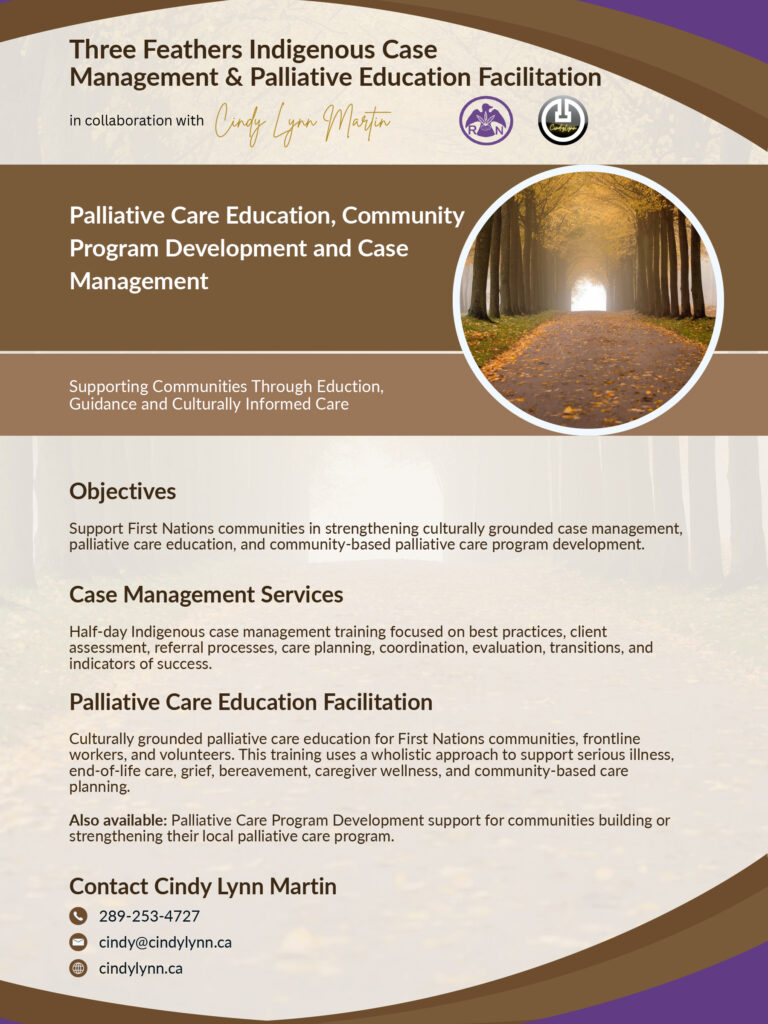
Services for First Nations Communities

Palliative Education Facilitation

Culturally grounded palliative care education for First Nations communities, frontline workers, volunteers, families, and care teams.


This training supports a wholistic understanding of serious illness, end-of-life care, grief, bereavement, caregiver wellness, and community-based support.

Supporting Individuals, Families, and Communities Through the Journey

This 16-hour training is delivered over two full days and provides palliative care education for frontline workers and volunteers within First Nations communities. The training supports a wholistic approach to care from the diagnosis of a life-limiting illness through the disease trajectory, end of life, and bereavement.

Training Format

16-hour session
2 full days
8:30 a.m. to 4:00 p.m.

A Wholistic and Culturally Grounded Approach

This training incorporates Indigenous teachings, the Reconnection Journey through the Tree Rings Wellness Framework/Wheel, and Canadian Virtual Hospice Indigenous Voices videos.

The learning experience supports understanding of grief, healing, compassion, community support, and the importance of reconnecting with strengths, values, and support systems.

Training Modules

The 16-hour Palliative Education Facilitation training includes eight modules that guide participants through the palliative approach to care, family support, advance care planning, symptom management, grief, caregiver wellness, and community care planning.

Module 1: Beginning the Journey
Understanding the palliative approach to care using the Reconnection Journey Wheel and the Indigenous Wellness Framework that connects the journey of birth, life, and death. The training supports learning of traditional Indigenous perspectives on holistic wellness, which aligns with palliative care principles to support individuals, families, and communities throughout life’s journey.
The discussion centres around the changes that occur within family roles as the sick role of the family member progresses. Cultural roles and responsibilities will affect the care plan, along with the understanding that historical trauma may influence the ways in which help is accepted.
Advance care planning includes discussion around serious illness conversations and making one’s wishes known, which is essential for our communities. The Substitute Decision Maker, Health Care Consent Hierarchy, and Power of Attorney for Personal Care are also reviewed.
Acute symptoms, such as pain and appropriate medications, are discussed with emphasis placed on the assessment of total pain, including breakthrough pain. The World Health Organization model is used to discuss pain management with the appropriate analgesic, along with the difference between drug addiction and drug tolerance.
This module discusses the signs of approaching death, the increased support needed for the family, and assisting them with preparations for the impending death. Discussion focuses on relieving symptoms and providing comfort measures.
This module explores grief and bereavement, including cumulative grief experienced in many Indigenous communities. Using the Reconnection Journey Wheel and Haudenosaunee teachings, participants discuss last wishes, spiritual protocols, messages to loved ones, memory bundles, personalized death announcements, and Tree Rings art therapy.
This module examines caregiver wellness, burnout prevention, and self-care strategies. Participants learn how to support individuals and families through end-of-life planning, cultural protocols, and the journey home while building resilience through the Reconnection Journey Wheel framework.
This module discusses developing a care plan as a community care team and how interdisciplinary collaboration is essential, as this work cannot be done alone. Cindy Lynn Martin and team will support this process by working with communities to uplift their practices, such as spiritual openings and traditional cleansing, to support culturally safe, respectful, and balanced care environments.

Who This Training Is For

This training is designed for those supporting individuals, families, and communities through serious illness, end-of-life care, grief, bereavement, and care planning.

First Nations Communities

For communities strengthening culturally grounded palliative care practices.

Frontline Workers

For those providing direct support to individuals and families.

Volunteers

For community members involved in care, comfort, planning, and support.

Care Teams

For teams working together to provide compassionate, coordinated care.

Families and Community Supporters

For those walking alongside loved ones through serious illness, end of life, and bereavement.

ADDITIONAL HALF-DAY PROGRAM

Developing a Palliative Care Program

Cindy also assists First Nations communities in developing or strengthening their palliative care programs. This half-day program meets communities where they are in their current stage of development and is based on the resource Five Phases of Developing a Palliative Care Program in First Nations Communities: A Workbook.

Bring Palliative Education Facilitation to Your Community

Training can be adapted to meet the needs of your community, organization, or care team. Connect with Cindy Lynn Martin to learn more about training availability or support for developing a community-based palliative care program.
Scroll to Top